
Written by: German News Service/DPA | Location: Berlin, Germany | Date: March 2, 2026 | Time: 11:30 AM
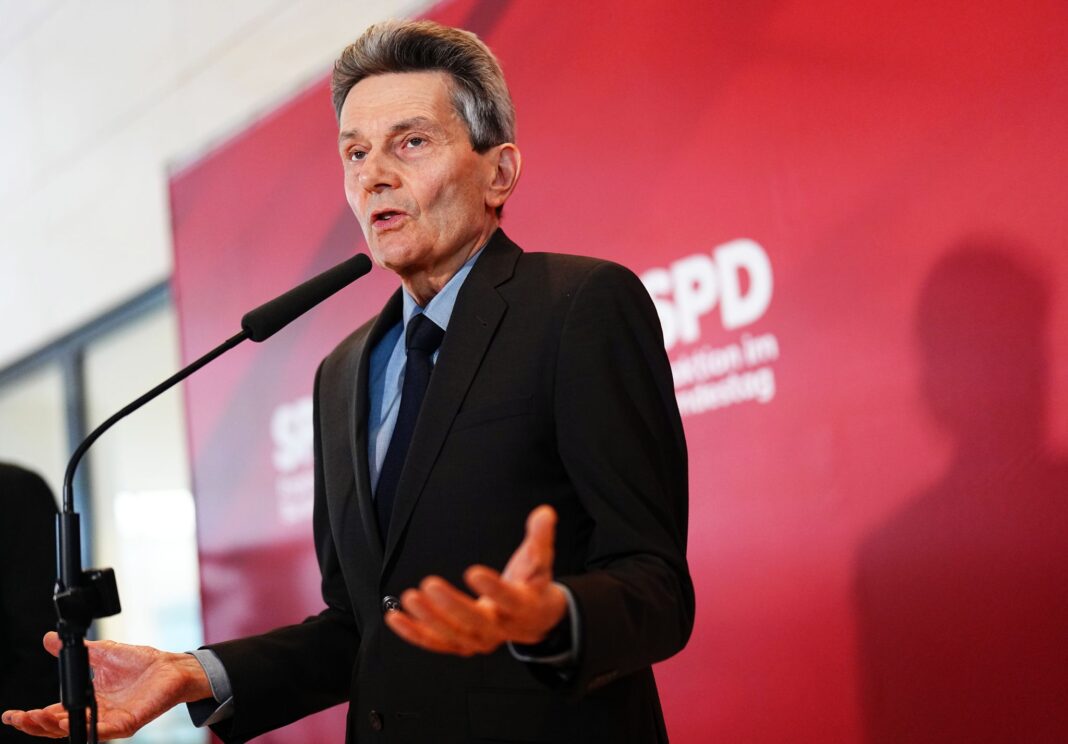
A senior leader within Germany’s coalition government has issued a sharp demand for transparency regarding the ongoing US-Israel joint strikes on Iran. Rolf Mützenich, the foreign policy spokesman for the Social Democratic Party (SPD), called on both nations to justify their massive military intervention. The SPD currently serves as the junior partner in Chancellor Friedrich Merz’s coalition. Speaking to the Tagesspiegel newspaper, Mützenich expressed deep skepticism over the “preventive” nature of the attacks. He warned that international doubts would persist until the US and Israel make their evidence public.
Skepticism Over “Preventive” Military Action
The Israeli government justified the weekend’s strikes as a necessary preventive reaction to halt Tehran’s nuclear program. However, the SPD spokesman argues that the rationale remains unproven. “Doubts will remain for as long as they do not make their evidence public,” Mützenich stated. He emphasized that the sudden shift from diplomacy to bombardment requires a high burden of proof.
Furthermore, the SPD leader criticized the “impenetrable” nature of US President Donald Trump’s strategic aims. He questioned why the American administration abandoned negotiations so abruptly. Just two days prior to the strikes, talks in Geneva had ended without a final breach. Mützenich now insists that Washington must explain why further nuclear program negotiations were considered “without perspective.”
Calls for Humanitarian Break in Hostilities
As the conflict intensifies, the SPD has officially called for an immediate break in hostilities. This pause would allow trapped civilians in Tehran and other targeted cities to seek safety. Because the strikes have hit political and military hubs in densely populated areas, the risk to non-combatants is soaring.
Mützenich did not shy away from acknowledging the brutality of the current regime in Tehran. He admitted that a legitimate, responsible government would benefit both Iranians and the international community. Nevertheless, he warned that regime change cannot be forced from the outside. He noted that experience shows changes of this kind could not be initiated from outside. He cited the region’s long history of failed interventions and coups as a primary reason for his concern.
The Collapse of the Geneva Nuclear Talks
The US-Israel joint strikes on Iran followed a tense deadline set by President Trump for early March. While the Geneva talks showed no clear progress, they had not officially collapsed before the missiles were launched. The sudden military escalation has caught many European allies off guard.
-
Strike Timing: Launched Saturday, targeting leadership and nuclear facilities.
-
Trump’s Deadline: Early March was the set limit for substantive nuclear progress.
-
SPD Stance: Demands a return to transparency and a humanitarian pause.
Germany now finds itself in a delicate position. Chancellor Merz must balance the pro-US stance of his party with the SPD’s demand for accountability. Consequently, the internal friction within the German government reflects a wider global divide over the legitimacy of this intervention.