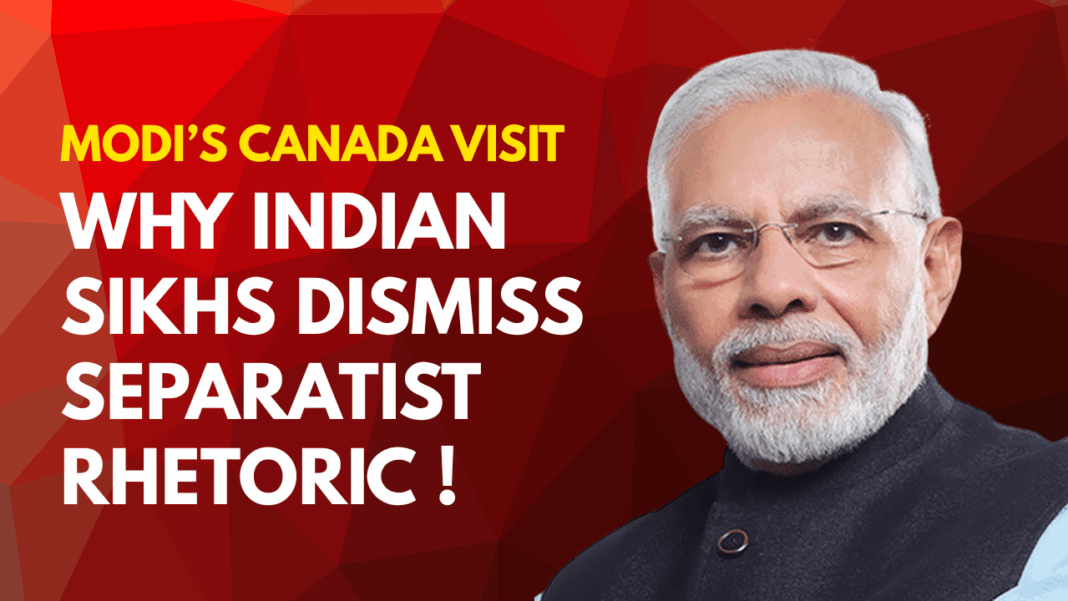

Hardline pro-Khalistani Sikh organizations based in Canada have fiercely opposed Prime Minister Narendra Modi’s upcoming visit for the G7 Summit, set for June 15-17 in Alberta, labeling it a threat to their cause.
Groups like the BC Gurdwaras Council, Sikh Federation, and World Sikh Organization of Canada have demanded Modi’s exclusion, citing alleged Indian government involvement in the 2023 killing of Hardeep Singh Nijjar. They plan a protest rally on June 14 at Parliament Hill. Yet, not a single Indian Sikh organization has joined this opposition, highlighting a stark divide.
Indian leaders, including External Affairs Minister S. Jaishankar, call the protests a ploy by Pakistan-backed extremists. Home Minister Amit Shah accuses Canada of harboring criminals and terrorists. Defense Minister Rajnath Singh warns of separatist violence.
The Khalistani narrative blames India for Nijjar’s death, but evidence points to Canada as a hideout for gangsters and smugglers. The so-called Khalistan referendum has failed to gain traction, now serving as a fundraising tool. Indian Sikhs reject these Canadian groups, favoring national unity.
The opposition stems from Khalistani separatists’ long-standing demand for an independent Sikh homeland. These groups view Modi as a symbol of Indian suppression, rooted in the 1984 Operation Blue Star. Nijjar’s killing has fueled their claims of Indian aggression.
The World Sikh Organization’s spokesperson, Moninder Singh, stated, “Modi’s visit endorses a regime that murders our leaders.” They allege India targets dissidents abroad. This narrative builds on unproven accusations of Indian involvement in Nijjar’s death, straining India-Canada ties. However, Indian Sikhs, numbering over 20 million in India, have not supported these claims. The Shiromani Gurdwara Parbandhak Committee (SGPC) recently reaffirmed loyalty to India, dismissing separatist rhetoric.
Indian leaders counter this aggressively. Jaishankar said, “Khalistani extremists with a violent past orchestrate these protests, backed by Pakistan’s ISI.” He urged Canada to curb this “haven” for terrorists.
Shah added, “Canada shelters criminals, gangsters, and smugglers under the guise of free speech.” He cited the 1985 Air India bombing by Khalistani militants as evidence of their threat. Singh noted, “Separatists have killed dozens in India; their actions abroad continue this terror.” These statements reflect India’s view that the opposition is limited to a fringe group, not the broader Sikh community.
The Khalistan referendum, pushed by Sikhs for Justice (SFJ), has failed to attract significant support. Launched in 2021, it aimed to gauge interest in a Sikh state but drew only small crowds, mainly in Canada and the UK.
Experts attribute this to waning enthusiasm among Sikhs globally. A 2023 survey by the SGPC found over 90% of Indian Sikhs oppose separatism. The referendum now raises funds through donations, with SFJ accused of misusing millions of dollars. Posts on X suggest it’s a money-making scheme, though this remains inconclusive.
Indian Sikhs’ disengagement from Canadian Khalistanis stems from historical and cultural ties to India. The 1990s insurgency left Punjab scarred, with thousands dead. Moderate Sikh leaders like Sukhbir Badal of the Shiromani Akali Dal call Khalistan “irrelevant.”
The diaspora’s radical fringe, influenced by Pakistan’s ISI, lacks legitimacy. India’s economic growth and Sikh contributions to its army further solidify this stance. Canadian Sikhs, about 770,000, include a vocal minority, but most reject extremism, per community leaders.
The divide underscores a geopolitical tug-of-war. Canada’s tolerance of separatists irks India. Modi’s visit will test this relationship. Sikh protests may escalate, but Indian Sikhs’ silence reinforces national unity. The Nijjar narrative lacks evidence, while Canada’s role as a potential criminal haven faces growing scrutiny. The failed referendum and fundraising expose Khalistani weakness, leaving their opposition isolated.