
Pointers
- Zohran Mamdani campaigns in Urdu and Hindi for NYC mayor.
- Social media posts fuel fears of “Islamization” in U.S.
- Critics cite UK incidents to warn against Mamdani.
- The candidate focuses on housing, climate, and workers’ rights.
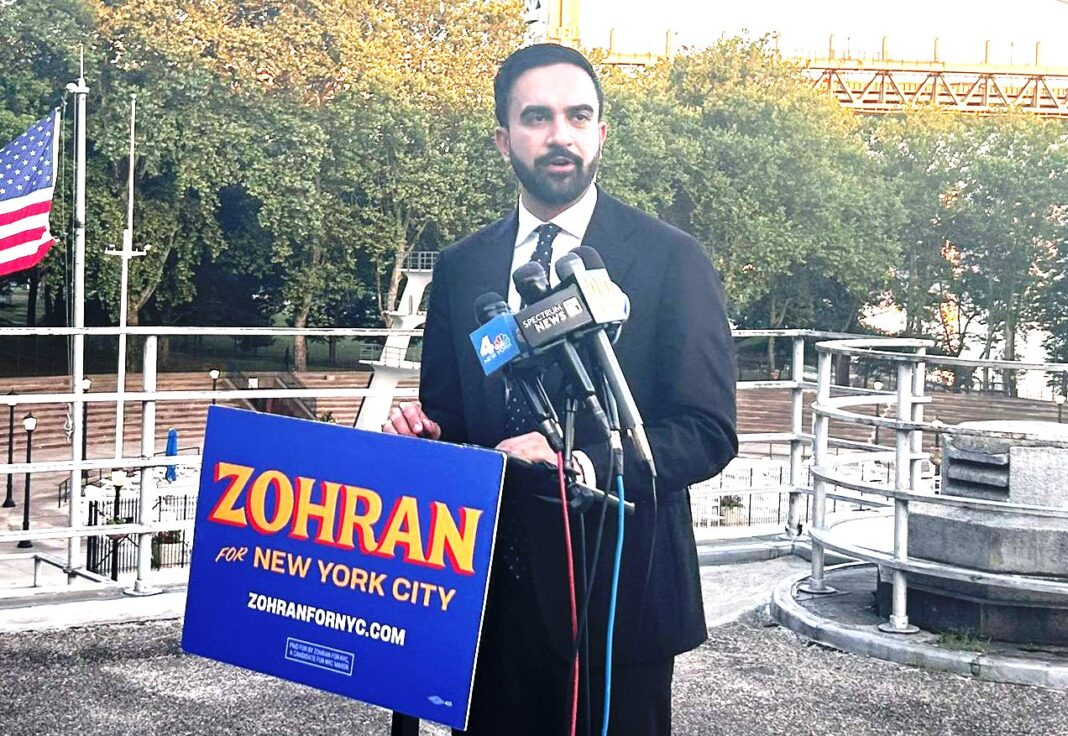
New York City’s mayoral race is heating up as Zohran Mamdani, a Muslim candidate, campaigns in Urdu and Hindi. His outreach to immigrant communities has triggered a wave of online controversy. Social media platforms, especially X, are buzzing with debates about his faith and intentions. Some users draw parallels to the UK, where reports of radical Islamist groups have raised alarms. Yet, Mamdani’s progressive platform emphasizes practical solutions for New Yorkers. The clash between his identity and public fears reveals a deeper divide.
Mamdani’s Campaign Reaches Diverse Voters in New York
Supporters praise his inclusivity, noting that 37% of New Yorkers are foreign-born. Critics, however, focus on his Muslim identity, often ignoring his policy goals. Social media amplifies these tensions, with some labeling his outreach as divisive. Despite the noise, Mamdani’s campaign gains traction in neighborhoods like Queens.
The backlash reflects broader anxieties about cultural change. Posts on X exaggerate fears, claiming Mamdani’s rise signals a shift toward Sharia law. These narratives lack evidence but draw thousands of views. Meanwhile, Mamdani’s team emphasizes his commitment to secular governance. His approach mirrors the success of multilingual campaigns in cities like Toronto.
X posts have fueled panic by linking Mamdani’s campaign to UK incidents. Users cite reports of Islamist groups patrolling London streets, enforcing dress codes, and advocating Sharia. One post by user Azat ( @AzatAlsalim ) referenced ISIS atrocities to warn of “Islamization” in the U.S. “They’re infiltrating our system,” the post claimed, garnering 10,000 likes.
Another user, Harris Sultan (@TheHarrisSultan), called Mamdani “anti-Semitic” and “anti-Hindu.” These claims remain unverified but spread rapidly.
Experts dismiss such comparisons as misleading. “The UK’s issues are specific and overstated,” said Dr. Sarah Khan, a political scientist at NYU. The U.S. Muslim population is just 1.1%, far smaller than the UK’s 6.7%. New York’s legal framework ensures secular governance. Still, fears persist, driven by declining birth rates among non-Muslims and higher fertility in some immigrant groups. These demographic shifts spark unease, though they’re natural in diverse cities.