

Pointers:
-
Fringe Muslim perspective advocates replacing the U.S. Constitution with the Quran.
-
Mainstream Muslim leaders reject such calls and support coexistence.
-
Pew Research shows 61% of U.S. Muslims favor religion-state separation.
-
CAIR condemns efforts to replace the Constitution, upholds democratic values.
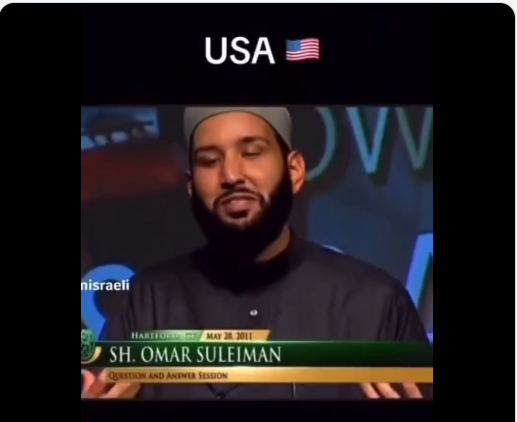
A recent X post by Alexander Duncan sparked controversy by quoting a fringe Muslim perspective advocating for replacing the U.S. Constitution with the Quran. This view, expressed by a small group, contrasts sharply with the broader Muslim American community’s stance. Mainstream leaders, including those from CAIR, emphasize the importance of coexistence with U.S. laws. A 2023 Pew Research Center survey revealed that 61% of Americans in the U.S.
Muslims support separating religion and state, highlighting a significant disconnect from the post’s claim.
The debate reignites post-9/11 tensions, where fears of Sharia law implementation surged, despite no credible evidence of widespread support. Legal experts, such as those from the American Bar Association, argue that the U.S. legal system protects against the imposition of religious law, as seen in historical cases. This fringe perspective, while marginal, fuels ongoing discussions about religious freedom and secular governance in America.
Mainstream Muslim Voices Counter Extremist Narratives
CAIR, a prominent Muslim civil rights organization, has consistently condemned calls to replace the Constitution, reaffirming its commitment to democratic principles. Ibrahim Hooper, CAIR’s spokesperson, stated, “We uphold the Constitution as the foundation of our rights.” The Institute for Social Policy and Understanding (ISPU) counters misinformation by showcasing Muslim contributions to U.S. civic life. Their 2024 report noted that 78% of Muslim Americans engage in community service, challenging extremist narratives.
CAIR, a prominent Muslim civil rights organization, has consistently condemned calls to replace the Constitution, reaffirming its commitment to democratic principles. Ibrahim Hooper, CAIR’s spokesperson, stated, “We uphold the Constitution as the foundation of our rights.” The Institute for Social Policy and Understanding (ISPU) counters misinformation by showcasing Muslim contributions to U.S. civic life. Their 2024 report noted that 78% of Muslim Americans engage in community service, challenging extremist narratives.
The rise of Islamophobia, with a 67% increase in anti-Muslim hate crimes in 2021 per FBI data, amplifies such polarizing statements. However, these views remain outliers. Educational initiatives aim to foster understanding, with ISPU’s Dalia Mogahed saying, “Misinformation harms community cohesion.” The ongoing tension between religious freedom and secular governance continues, with no significant movement to alter the Constitution based on religious texts.