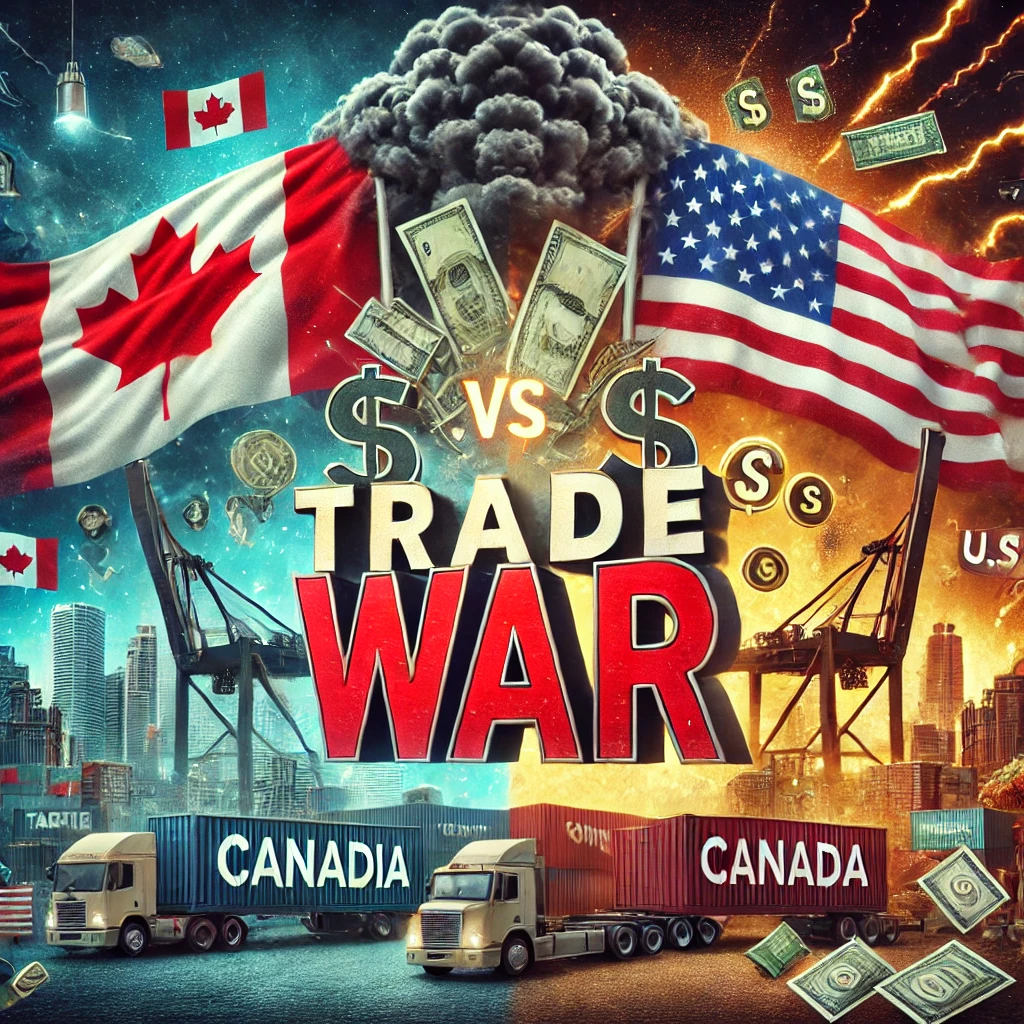

Canada has announced retaliatory tariffs on $20 billion worth of U.S. goods, escalating tensions as the global trade war intensifies. The measures come in response to recent American trade policies that Ottawa says unfairly target Canadian industries.
Canada reveals the sweeping tariffs
Canadian officials revealed the sweeping tariffs on Wednesday, marking one of the most significant economic countermeasures in years. Prime Minister Justin Trudeau called the move “a necessary step to defend Canadian businesses and workers from unjust U.S. policies.”
The tariffs will affect many U.S. products, including steel, aluminum, agricultural goods, and consumer products. Finance Minister Chrystia Freeland emphasized that Canada had “no choice” but to respond forcefully.
“The United States has made decisions that harm our economy,” Freeland said at a press conference in Ottawa. “We will always stand up for Canadian workers, and these countermeasures are designed to ensure that our industries are not unfairly disadvantaged.”
Trade War Heats Up
The announcement follows new American tariffs on Canadian steel and aluminum, which the Biden administration imposed earlier this month. U.S. officials have justified the tariffs as necessary to protect domestic industries. However, Canada and other trade partners argue that Washington is fueling an unnecessary economic conflict.
International trade analysts warn that the standoff could have long-term consequences for North American supply chains. Scott Lincicome, a trade policy expert at the Cato Institute, said the situation risks “damaging decades of integrated manufacturing between the two nations.”
“We are seeing economic nationalism override sound trade policy,” Lincicome told Reuters. “Retaliatory tariffs often escalate quickly, and consumers on both sides of the border will feel the effects.”
Impact on Businesses and Consumers
Canadian business leaders welcomed the government’s firm stance but expressed concerns about potential disruptions. Goldy Hyder, CEO of the Business Council of Canada, urged both nations to find a diplomatic solution before economic damage worsens.
“Trade wars do not produce winners, only casualties,” Hyder told CBC News. “We need cooler heads to prevail so businesses can continue operating without uncertainty.”
Many American exporters now face restricted access to the Canadian market, a critical destination for U.S. goods. Dairy farmers, auto manufacturers, and steel producers are bracing for revenue losses as the tariffs take effect.
In Washington, White House officials downplayed the impact of Canada’s actions, arguing that the U.S. economy remains strong. U.S. Trade Representative Katherine Tai said the administration is “committed to fair trade” and will continue to “defend American interests.”
Diplomatic Tensions Rise
Beyond the economic effects, the tariffs threaten to strain U.S.-Canada relations. Trudeau and President Joe Biden have maintained a cordial relationship, but recent trade disputes have tested their partnership. Political analysts suggest that if the situation escalates further, it could complicate broader policy negotiations, including energy and security agreements.
Foreign policy expert Edward Alden noted that while Canada has historically sought to avoid confrontations with the U.S., it is now “clearly willing to push back when its industries are targeted.”
“This marks a shift in how Canada approaches trade disputes,” Alden told The Globe and Mail. “We are entering a new phase in North American trade relations.”
Uncertain Future
Both governments have signaled openness to negotiations, but no clear resolution exists. Business leaders and trade experts warn that prolonged economic retaliation could further disrupt industries struggling with inflation and supply chain challenges.
Canadian consumers are expected to see higher prices on affected U.S. goods, while American businesses will face reduced market access in Canada. As tensions mount, all eyes remain on Ottawa and Washington to see whether diplomacy can prevent further escalation.