
Pointers :
• Commemoration at Plötzensee memorial warns against historical amnesia.
• Matthias Brandt links Nazi-era rhetoric to modern far-right language.
• Justice Minister emphasizes protecting democracy and the rule of law.
• Event marks 81st anniversary of failed Hitler assassination attempt.
• Commemoration at Plötzensee memorial warns against historical amnesia.
• Matthias Brandt links Nazi-era rhetoric to modern far-right language.
• Justice Minister emphasizes protecting democracy and the rule of law.
• Event marks 81st anniversary of failed Hitler assassination attempt.
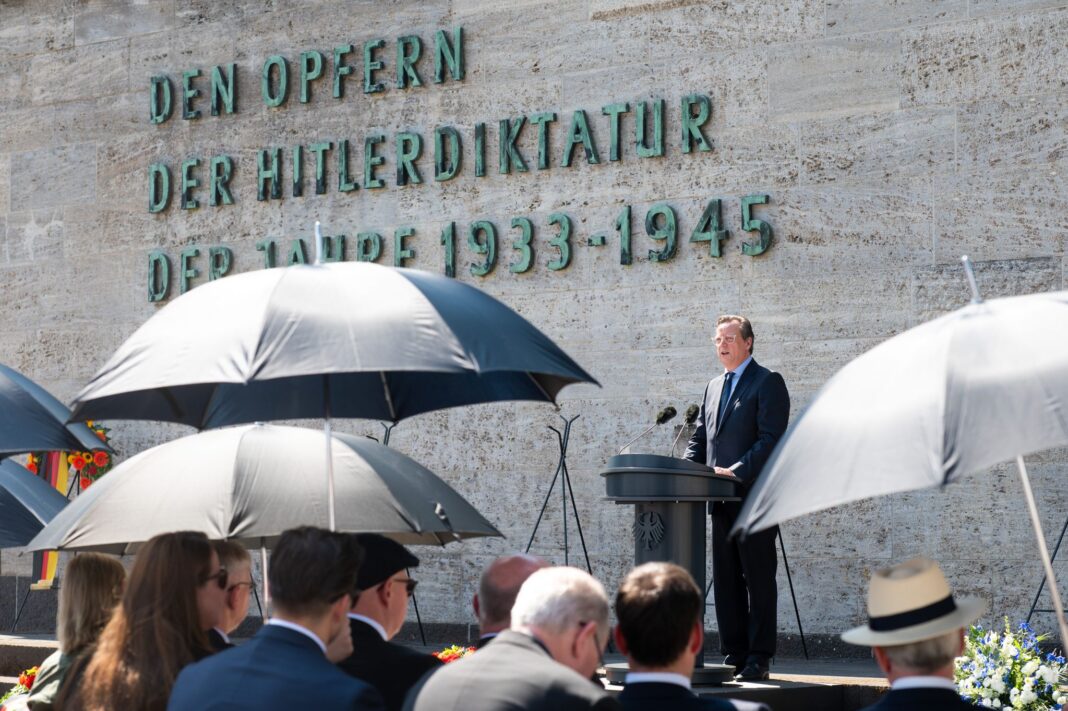
At a recent Plötzensee memorial ceremony in Berlin, speakers raised alarms about the resurgence of far-right ideologies. Matthias Brandt, son of former Chancellor Willy Brandt, highlighted how hateful language reminiscent of Nazi propaganda is creeping into modern discourse. He noted that racist terms, once prevalent in the 1930s, are resurfacing in public spaces and online platforms.
“Ignoring this trend is a choice to let history repeat itself,” Brandt warned, urging active resistance. The event, held on July 20, 2025, marked the 81st anniversary of the failed assassination attempt on Adolf Hitler by Claus Schenk Graf von Stauffenberg.
Brandt’s speech emphasized the need to confront exclusionary rhetoric head-on. He cited a 2024 study by the Anti-Defamation League, which reported a 30% rise in hate speech across Europe. This growing coarseness in language and behavior threatens social cohesion, he added. The ceremony served as a reminder to stay vigilant against divisive ideologies, ensuring they do not gain a foothold in democratic societies.
Safeguarding Democracy Against Historical Amnesia
Germany’s Justice Minister Stefanie Hubig stressed the collective responsibility to protect democracy. Speaking at the Plötzensee event, she declared, “We cannot let Germany become a source of such horrors again.” Hubig referenced the country’s dark history under Nazi rule, urging citizens to defend the rule of law.
The 1944 assassination attempt on Hitler, led by Stauffenberg, was a bold act of resistance against tyranny, she noted. Its failure led to brutal reprisals, with thousands executed. Hubig called for louder, unflinching voices to counter far-right extremism.
A 2025 report by the European Union Agency for Fundamental Rights highlighted a rise in far-right political activity across Germany, underscoring her concerns. She emphasized that democracy thrives on active participation and vigilance.
The Plötzensee memorial, where many anti-Nazi resisters were executed, stands as a stark reminder of the cost of inaction. Hubig’s message resonated with attendees, who pledged to uphold democratic values and reject hate-driven ideologies in all forms.