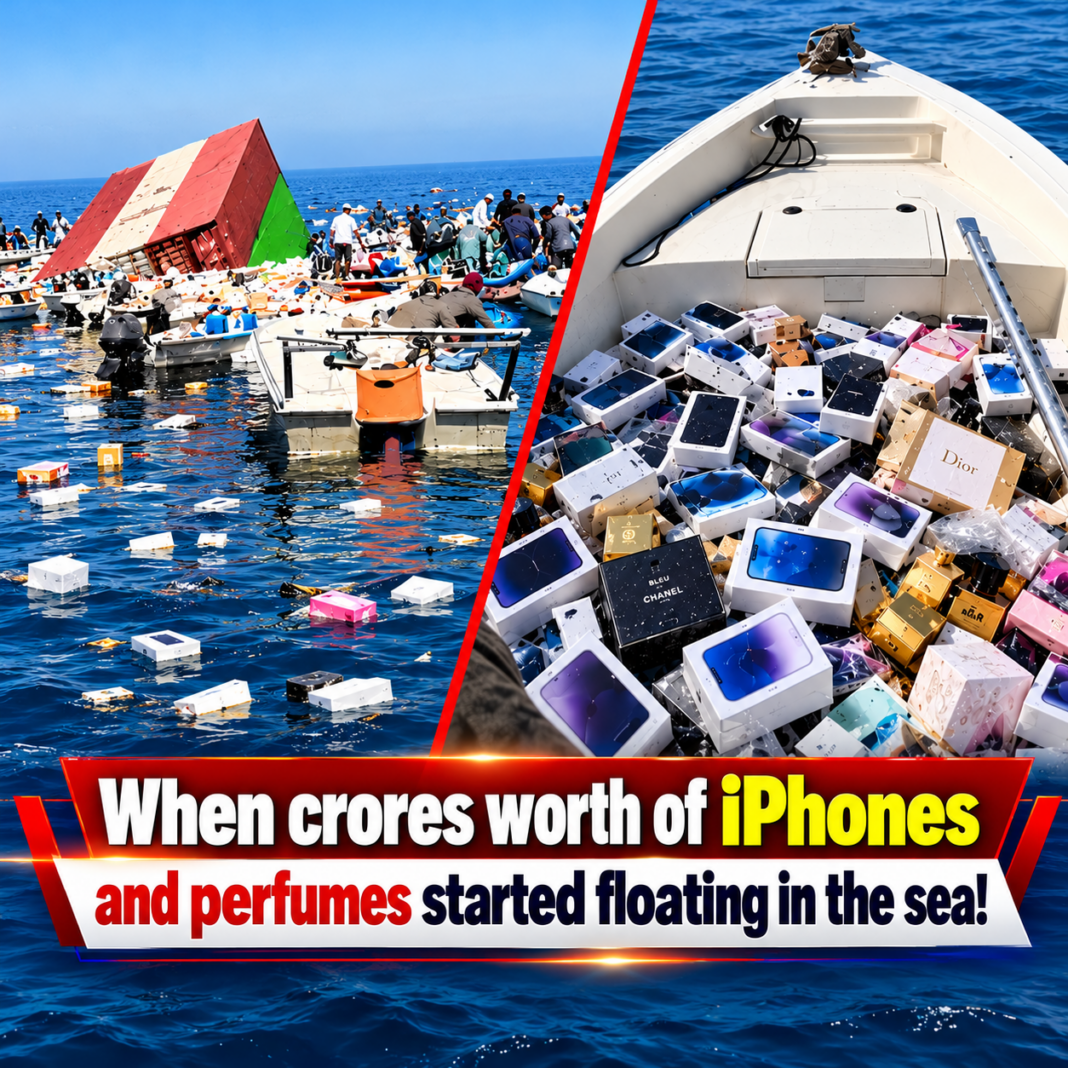

When crates of iPhones and high-end perfumes began bobbing in the water near the Strait of Hormuz on October 14, 2026, the scene quickly drew attention. Local fishermen and sailors spotted the floating goods and headed out in small boats to collect what they could. Videos of people hauling boxes out of the sea have since spread across social media, turning an ordinary stretch of water into something that looked almost staged.
The cargo belonged to the Singapore-flagged, UAE-operated ship GFS Pride. The vessel was moving through the strait with roughly 2,500 containers when a heavy blast and fire broke out. The fire spread, the ship eventually sank, and the contents began spilling into the sea. All 21 crew members were evacuated safely; no lives were lost.
The exact cause of the explosion remains unclear. Maritime officials and independent monitors have reported that an unidentified projectile struck the ship, possibly a missile or drone, at a time when attacks on commercial traffic in the region have increased. Other accounts say the vessel hit a sea mine. Official quotes from bodies such as UKMTO or CENTCOM on this specific case are still emerging through bulletins and wire services.
Iran’s Islamic Revolutionary Guard Corps offered a different account through Sepah News. The IRGC said the ship was not hit by any external strike. Instead, it claimed the GFS Pride took an unauthorised route through a sensitive military zone in the Strait of Hormuz, collided with a naval mine, and that the collision set off the blast and fire.
Escalating threats to commercial shipping in the Persian Gulf and the Strait of Hormuz
The broader picture has drawn consistent warnings. “The escalating threats to commercial shipping in the Persian Gulf and the Strait of Hormuz represent an unacceptable danger to international trade, freedom of navigation, and the safety of civilian mariners,” is how international maritime security coalitions monitoring the strait have repeatedly put it. Regional naval intelligence and shipping risk analysts have made similar points: “Vessels transiting these critical chokepoints face unprecedented asymmetric risks from both state-backed actors and localised maritime hazards, requiring extreme caution and adherence to designated security corridors.”
While investigators and governments argue over the cause, the immediate result has been the scattered cargo. Millions of dollars’ worth of phones and perfume drifted on the surface, and people nearby moved quickly to recover it. The episode sits against the larger backdrop of commercial shipping in the Persian Gulf operating under steady risk, with regional tensions still high and no clear end in sight.