

Written by: Manjeet Sehgal | Location: New Delhi, India | Date: March 2, 2026 | Time: 3:23 AM
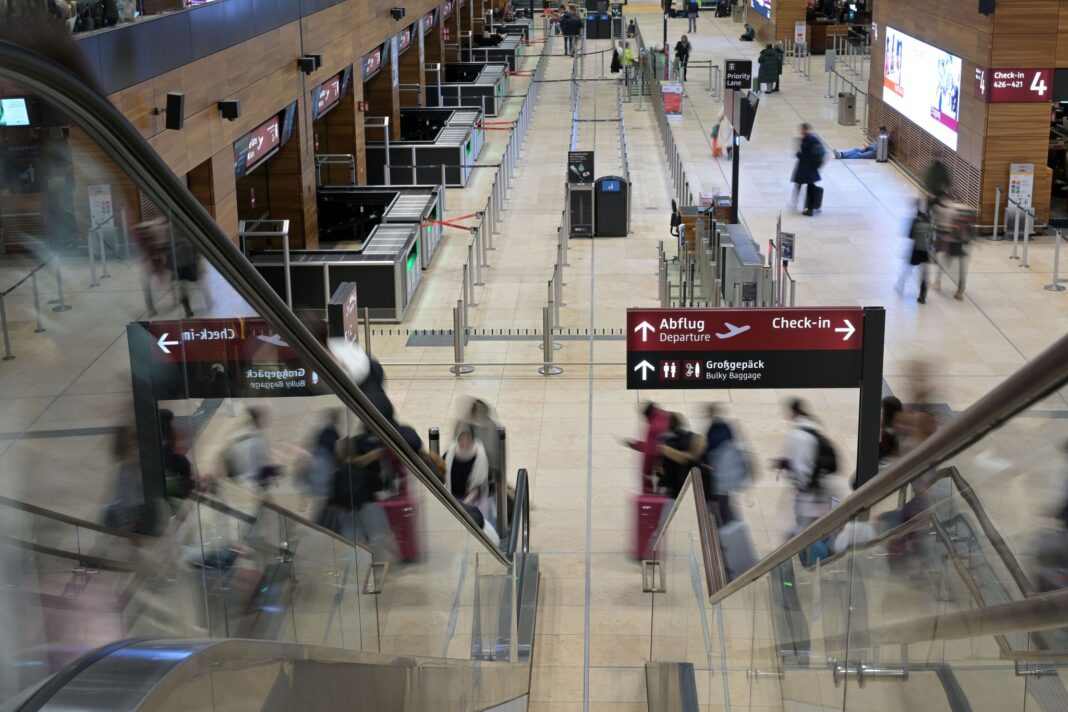
The global aviation industry is reeling from a massive “system shock” following the US-Israel joint strikes on Iran. Berlin’s Brandenburg Airport (BER) became a flashpoint for this crisis on Sunday. All flights to and from the Middle East have been halted indefinitely. A spokesman for BER confirmed that the suspension affects critical transit hubs like Tel Aviv, Dubai, Jeddah, and Doha. While airlines initially hoped to resume services by Monday morning, the situation has worsened. Escalating retaliatory missile exchanges between Iran and coalition bases have made the region a “no-fly zone.”
The Berlin Shutdown and Regional Airspace Collapse
The decision at BER airport mirrors a wider collapse of international flight corridors. Security at Berlin’s major airport was increased following reports of mid-flight diversions. Two outbound flights to Dubai and Doha were forced to return safely to Berlin. Consequently, thousands of passengers find themselves trapped in terminal lounges with very little information.
The airport spokesman advised all travelers to consult airline websites for updates. However, many report that digital systems are failing under heavy traffic. Millions of simultaneous inquiries have overwhelmed server capacities globally.
This move followed Saturday’s “Operation Epic Fury.” US and Israeli forces targeted Iranian leadership and nuclear facilities during the strike. In response, Tehran launched a wave of ballistic missiles at coalition bases. This exchange triggered immediate airspace closures in Israel, Iran, Iraq, Jordan, and the UAE. Flightradar24 maps showed a “hollowed-out sky” early Sunday morning. Major carriers like Lufthansa and Emirates suspended all operations to ensure passenger safety.
The Dubai Crisis: 20,000 Stranded and Growing
Dubai International Airport (DXB) has turned into a scene of humanitarian desperation. Current reports suggest that an estimated 20,000 passengers are currently stranded across the UAE. Among them are thousands of Indian nationals. Many were transit passengers connecting to Europe or the Americas. Because Dubai sits at the crossroads of East-West travel, the closure has severed a primary global artery.
Reports from the ground indicate that the situation is deteriorating rapidly. Many travelers have exhausted their funds after 48 hours of waiting. Families with young children and elderly passengers are facing a critical shortage of medicines. “We have no money for food, and my father’s heart medication is running out,” shared one stranded passenger.
-
Indians Stranded: Over 5,000 Indian citizens are stuck at DXB and Sharjah airports.
-
Economic Impact: Low-wage workers have spent their life savings on now-cancelled tickets.
-
Medical Needs: Groups are pleading for insulin, blood pressure medication, and infant formula.
Global Pleas for Humanitarian Intervention
The crisis is not limited to Indian nationals. South African travelers in Saudi Arabia and Qatar have issued urgent pleas for evacuation. Dr. Naseeba Kathrada, currently in Mecca, appealed for a “special flight” to bring citizens home. According to SABC News, many citizens feel “left in the dark” by their embassies.
Similarly, Spain’s Ministry of Foreign Affairs has activated a contingency plan. They are responsible for 30,000 nationals currently in the region. Consular staff in Abu Dhabi admit that evacuation flights are impossible right now. This is due to the strict over-flight bans in place. The irony is that the lack of a “humanitarian air corridor” prevents even the wealthy from escaping.
Conclusion: A World Waiting for the Skies to Clear
The World Health Organization (WHO) warns that this shutdown will exacerbate fragile humanitarian environments. Disruption of cargo flights will halt the delivery of life-saving supplies to Yemen and Syria. Because the US and Israel vow to continue “preventive” strikes, the industry faces a sharp shock.
Airlines are now rerouting flights through longer, more expensive paths. This shift will likely drive up global fuel surcharges by 25% within the week. For the thousands stranded without money or medicine, the focus is now on survival. The world remains grounded, waiting for the smoke over the Gulf to clear.
—-with Agency Inputs /German News Service /DPA