

Conflict Origins: The Central Government’s Intervention
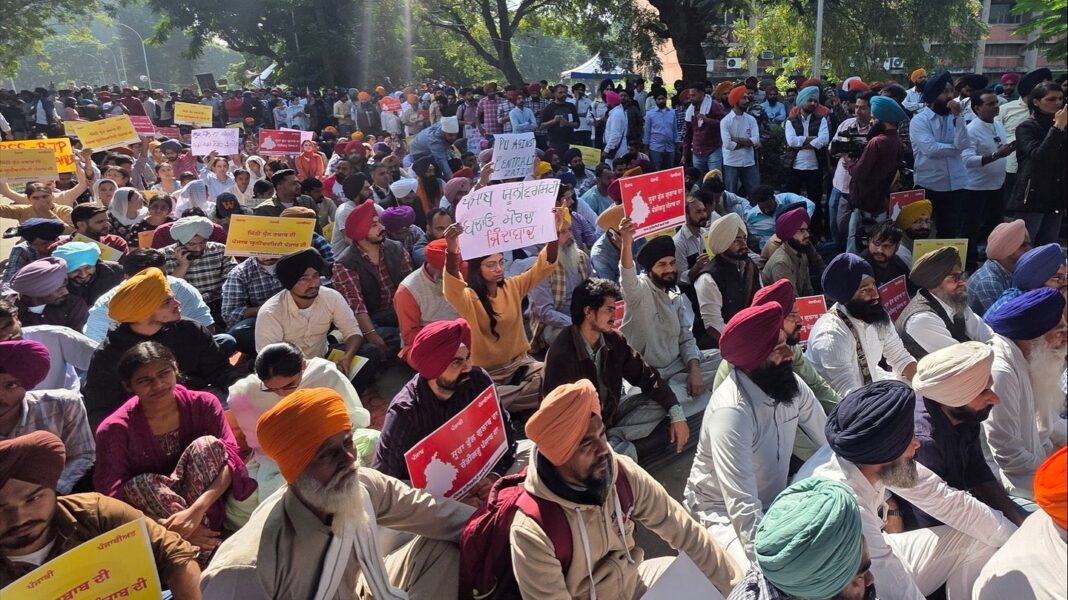
The core of the conflict stemmed from the Union Government’s (MoE) earlier structural interference in the Panjab University Senate. The government provides the vast majority of the university’s funding; this is about 92%. It had sought to dramatically reduce the size and alter the structure of the democratically elected Senate. The government stated its rationale was to streamline the decision-making process. However, critics—this group included students, faculty, and alumni—interpreted the move as a breach of the university’s historical autonomy. They considered it a direct attempt to reduce democratic representation. This action effectively increased central control over the institution.
Protests Continue Despite Order Withdrawal
The Union Government ultimately rescinded the restructuring order. Despite this, the protests intensified due to a critical trust deficit and immediate demands. The academic community viewed the initial diktat as an attack on the integrity of the institution. They saw the cancellation merely as a tactical retreat under pressure. They did not accept it as a guarantee that such interference would not recur, especially considering the university’s heavy reliance on central funding. The primary democratic demand remains the immediate scheduling of the long-delayed Senate elections.
The Fight for Democratic Legitimacy
Without an elected Senate, the VC and nominated bodies retain complete control. This situation undermines the body’s legitimate functioning. The academic struggle thus transformed into a fight for the restoration of democratic legitimacy. The crisis deepened when Vice Chancellor (VC) Renu Vig alleged that “outsiders” had “hijacked” the protest. These groups included farmer union activists and even Nihang groups. This fundamentally shifted the nature of the academic movement into a broader political spectacle and assertion of regional identity.
Political Mobilization and The Policing Controversy
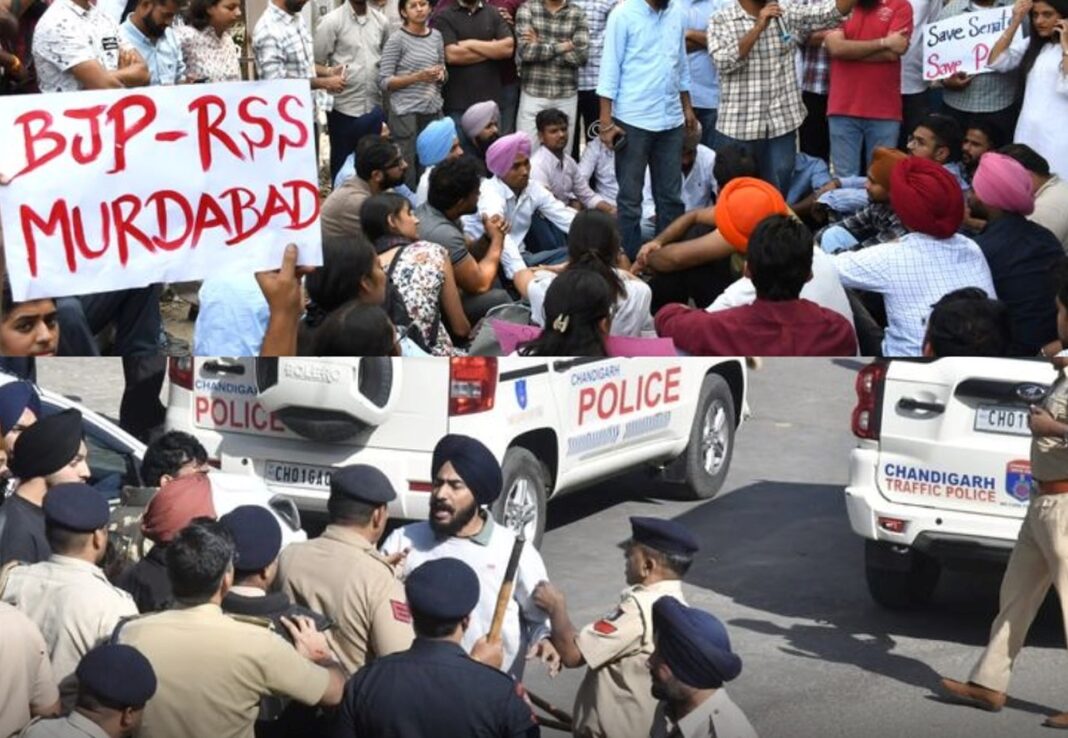
The presence of these external groups significantly escalated the tension. The Punjab Government faced sharp criticism. Detractors accused the state of giving the protest a political colour. They allegedly supported the external groups’ involvement, attempting to exert regional influence and embarrass the Central Government. Tensions were further exacerbated by reports of Haryana Police personnel being deployed in Chandigarh, a Union Territory that is the shared capital. For many in Punjab, this deployment was seen as an instance of Central overreach. The escalation led to robust police action against the demonstrators. Reports confirmed that several journalists were injured during the clashes. This raised serious concerns regarding the heavy-handed use of force and the curbing of press freedom while covering the politically charged academic dispute.



 earlier structural interference in the PU Senate.)